
Fast, Digital and Transparent: mvb Plants Worldwide Streamlines Work Processes in Container Management

How the plant wholesaler mvb streamlines processes and saves working hours every day by using Logistikbude’s Load Carrier Management System

In the plant trade, containers from the Dutch company Container Centralen (CC) have been the industry standard for years. These containers (CCs) enable the efficient transport of sensitive goods, but at the same time present a key challenge: managing the load carriers across company boundaries.
This is because, throughout the supply chain – from producers and wholesalers to haulers and customers – containers are constantly being exchanged, booked and coordinated. In many companies, this management is still carried out manually, using a mix of Excel spreadsheets, standalone systems and email communication. The consequences are: a high administrative burden, a lack of transparency and error-prone processes.
Manual processes are holding back day-to-day operations at mvb
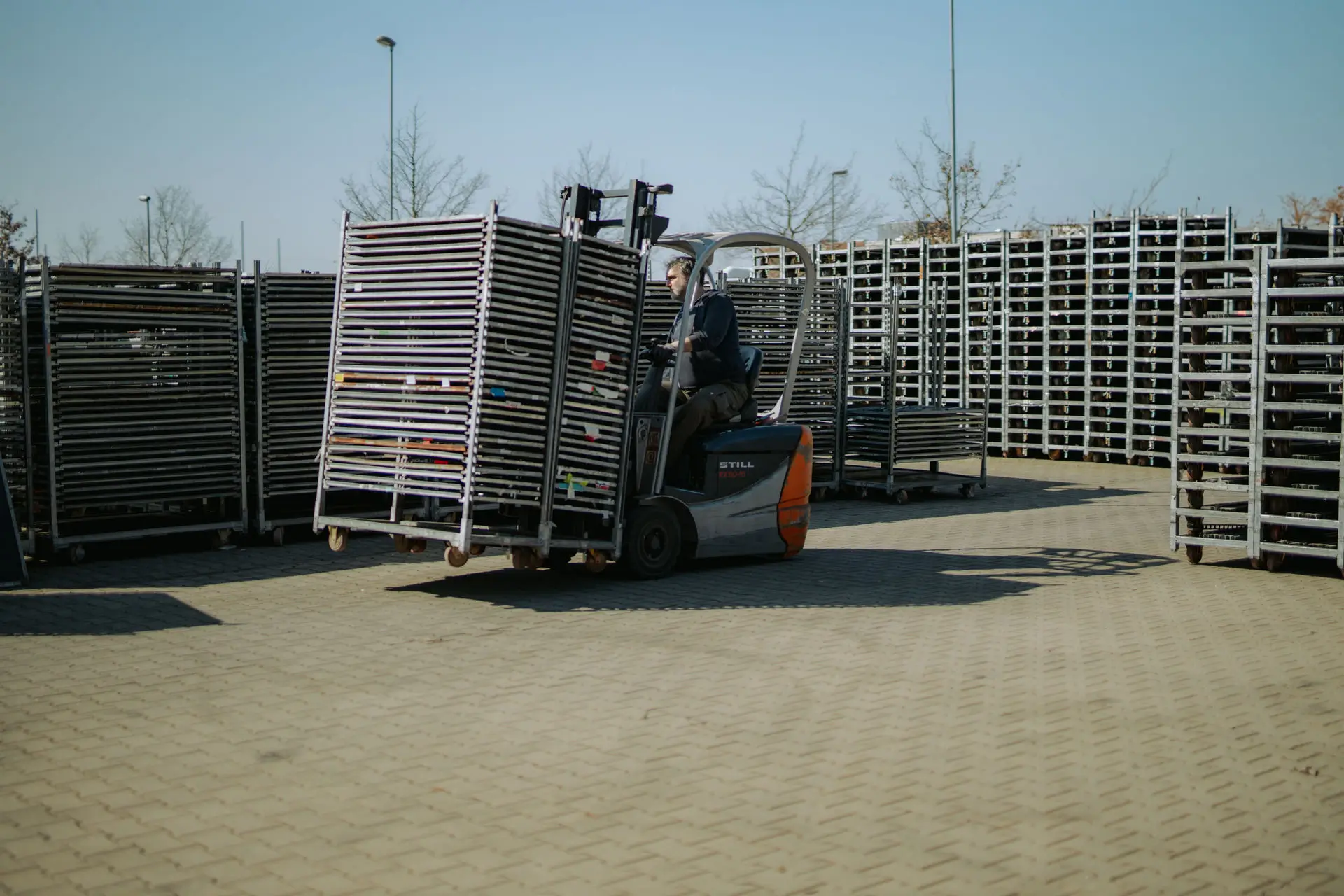
A similar pattern was also evident for a long time at mvb – plants worldwide Marktverband Bremen GmbH, or mvb for short. The North German plant wholesaler primarily ships goods from German suppliers to other European countries and handles large volumes of CCs across Europe every year through numerous partners.
Managing the CCs is a cross-organizational process involving not only mvb staff but also suppliers, haulers and end customers. They exchange the containers and coordinate with one another. Until now, these processes were largely organized manually: the mvb team booked the containers by hand, checked the balances monthly and reconciled them with freight forwarders, suppliers and customers via email or telephone.Interim balances had to be settled individually on a regular basis – a time-consuming and error-prone process.
Early attempts at digitization are reaching their limits
Steffen Ehlers and Elrike Kroker, who are responsible for order processing and logistics at mvb, were well aware of the significant effort involved in these coordination processes. They therefore opted for software designed to assist them in managing loading equipment. However, it did not allow simultaneous access to stock levels, nor was it possible to work on it across multiple devices at the same time. Furthermore, the software was hosted locally as a closed system. No one outside the company had access to the latest stock information. When technical support was then discontinued, a different solution was needed. Kroker explains:
“That was the right moment for us not only to invest in new software, but also to review our internal processes and workflows.”
A central platform instead of fragmented processes
mvb decided to completely overhaul its container management system. The team led by Kroker and Ehlers found what they were looking for at Logistikbude. The Dortmund-based tech company offers the first ‘Load Carrier Management System’, or LCMS for short: a system that digitally maps the entire lifecycle of load carriers such as CCs, as well as Euro pallets, mesh racks and meat crates, and brings all stakeholders together on a single platform.

“Just as a Warehouse Management System (WMS) controls warehouse processes and a Transport Management System (TMS) organises transport, an LCMS takes charge of managing pallets, racks and mesh boxes,” explains Dr Philipp Hüning, co-founder and CEO of Logistikbude. “Our aim is to automate load carrier management as far as possible.”
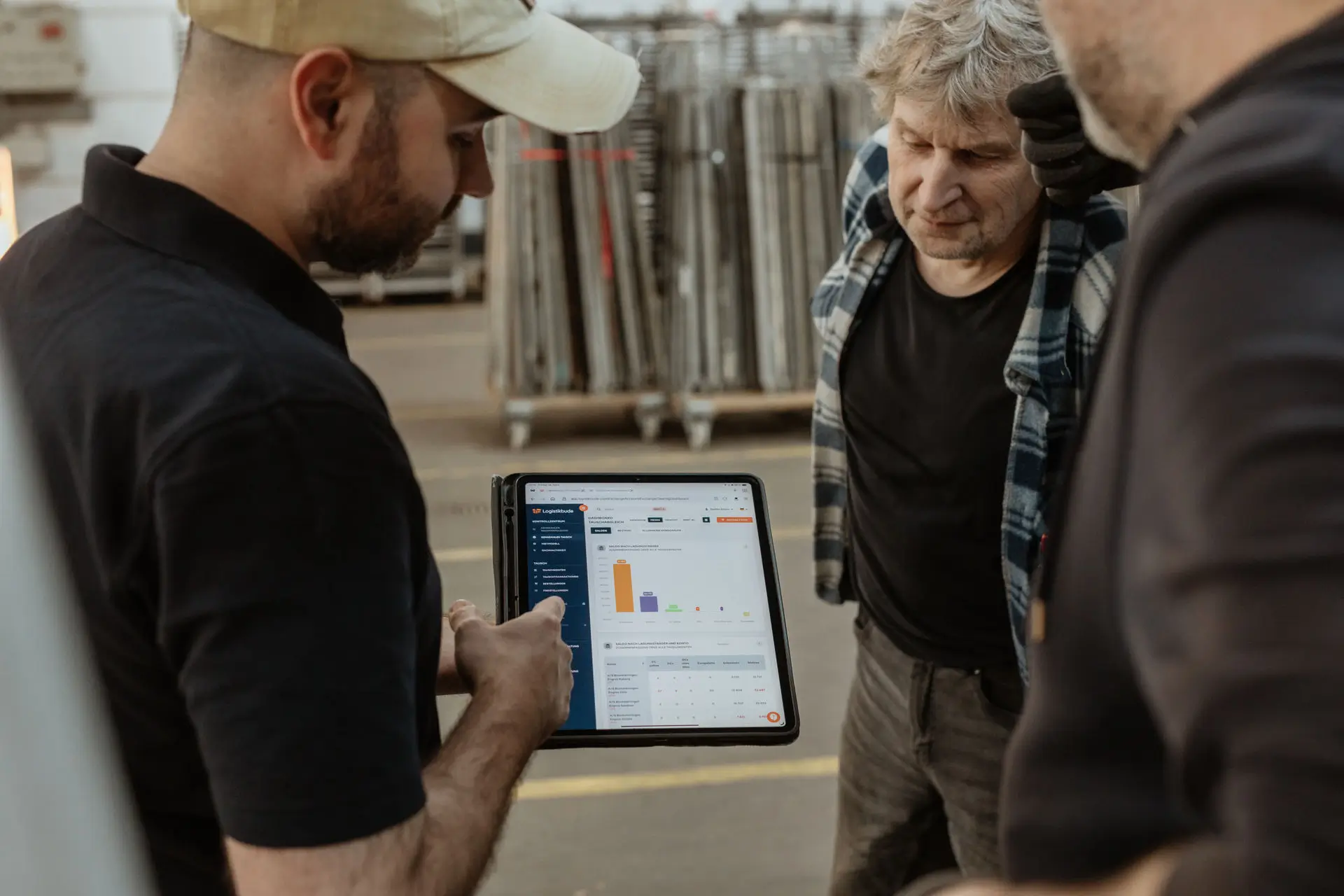
The web-based application centrally records bookings, stock levels and exchange transactions, making them visible in real time. Most importantly, freight forwarders, suppliers and customers have direct access to relevant information, which significantly simplifies reconciliation. Manual processes – such as manually updating stock levels or sending out balance lists – are largely eliminated. Particularly in an environment with many exchange partners, such as at mvb, this transparency provides a noticeable reduction in workload and measurable time savings, as all parties involved work with the same data. Queries are reduced and sources of error are minimised.
Efficiency gains through automated booking processes
A key advantage for mvb lies in the ability to make direct bookings. This is because the plant supplier also facilitates the exchange of containers between customers as required, without the containers being physically present on site. Whereas these exchange transactions previously had to be booked manually across up to four steps and involving several parties, this feature allows the entire process to be completed directly in a single step.
Significant time savings in day-to-day operations
This is a considerable relief, particularly during the peak season, when up to 1,500 CCs are loaded each week: as part of order processing at mvb, Steffen Ehlers handles around 50 container bookings in a single working day. Roughly half of these are direct bookings, where containers are exchanged between other companies. “Because of the many steps involved, we used to check several times to ensure that the swap transactions were booked correctly. That’s no longer necessary,” he says. Instead, current stock levels are now credited automatically to the relevant swap account.
“On average, I save about a third of my working time thanks to the streamlined booking processes,” says Ehlers.
.jpg)
Comprehensive insight into stock levels and regular updates
In addition, customers can set alerts in the system if they urgently need more containers, whilst others can indicate that they have too many on site – this simplifies communication between them and further automates the exchange process. Currently, around 130 exchange partners regularly receive an automatic email containing a web link that allows them to track current container levels. The mvb staff who load the containers in the distribution hall are also involved and can view stock levels at any time. Previously, Ehlers had to enter the current figures into Excel spreadsheets, print them out every morning and take them to his colleagues.
“The automated stock overview alone saves me 45 minutes of unnecessary work time every morning,” says Ehlers.
A structural issue within the industry
The mvb use case is a prime example of a structural challenge facing many companies in the plant trade: load carrier management is often underestimated, even though it entails significant operational effort and costs. Hüning:
“Particularly with standardised pooling systems such as CCs, complex interdependencies arise between the parties involved. Without digital support, it is difficult to manage these processes efficiently.”
The introduction of an LCMS demonstrates the potential offered by the digitalisation of this sector: less manual work, greater transparency and significantly improved collaboration throughout the entire supply chain.
Photographer: Yvonne Ehlers

Schedule a free consultation now!
We would like to get to know you and your current challenges with reusable objects. As a first step, we analyse your status quo together and check where there is potential for optimization and automation. If we have a suitable solution for you, we will present our solution to you on your use case in a second appointment.
