
Load Carrier Tracking in Real-Time – Never Again Lost Pallets, Containers, and Racks
Say goodbye to shrinkage, unclear inventories, and hours spent searching for your load carriers! With our digital load carrier tracking software, you'll always know where your pallets, containers, IBCs, and special load carriers are – automated, transparent, and seamlessly integrated into your logistics.








The Typical Challenges Without Digital Load Carrier Tracking
Shrinkage without a trace
Containers, mesh boxes, and special load carriers disappear in the supply chain. Without tracking, nobody knows where they were last – and expensive repurchases happen every year.
Flying blind with inventory
How many load carriers are currently with which customer? Which ones are in transit? Which ones need repair? Without digital tracking, it's all guesswork instead of knowledge.
Paper chaos
Paper load carrier slips, manual data entry, incorrect inputs. By the time the booking is in the system, the load carriers are long gone – without a clean data record.
Digital Load Carrier Tracking – One System for All Reusable Items
Tracking for Every Load Carrier Type
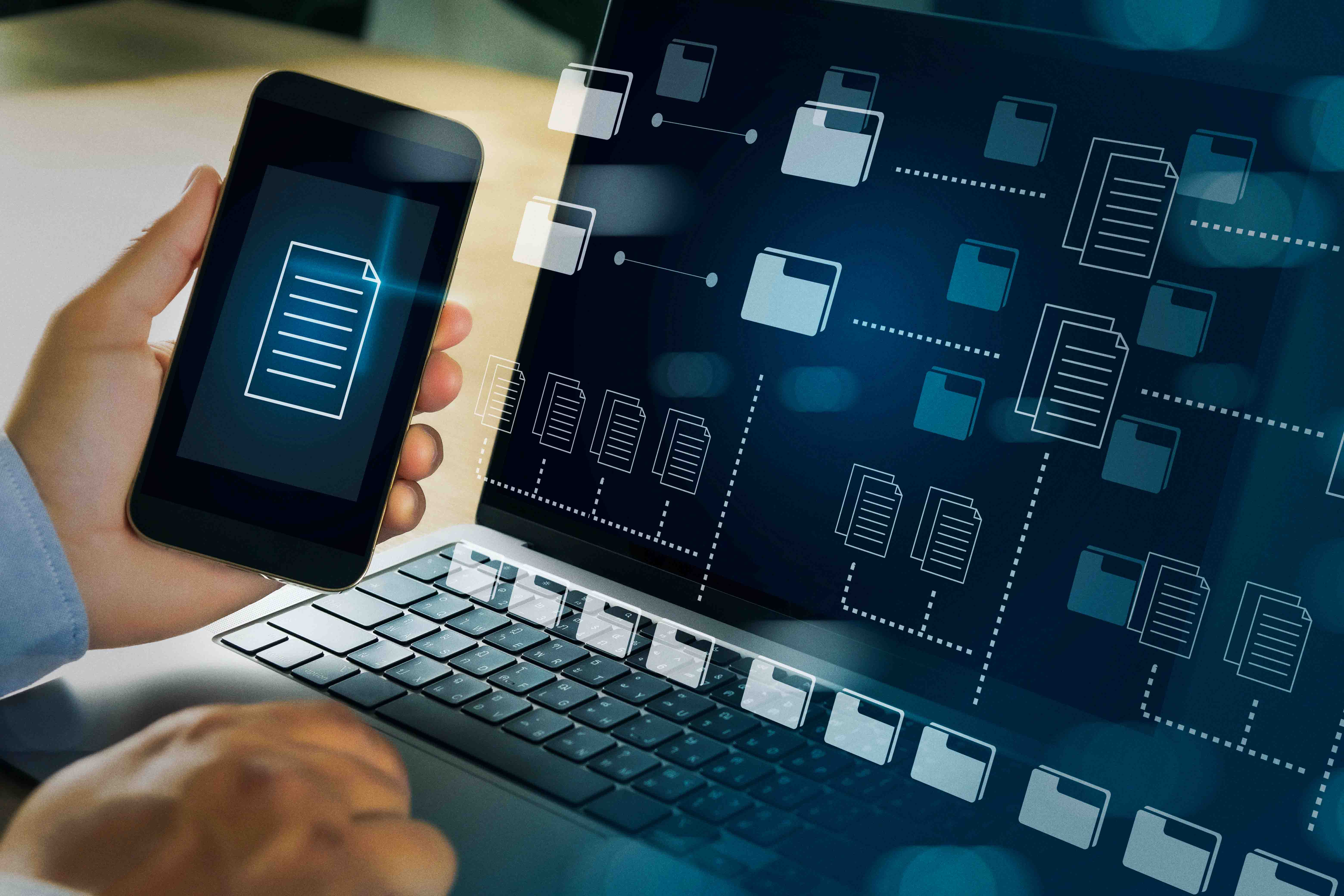
Whether Euro pallet, mesh box, IBC, KLT, CC container, special load carrier, or swap body – our system centrally manages all reusable objects in one database.
Real-Time Transparency
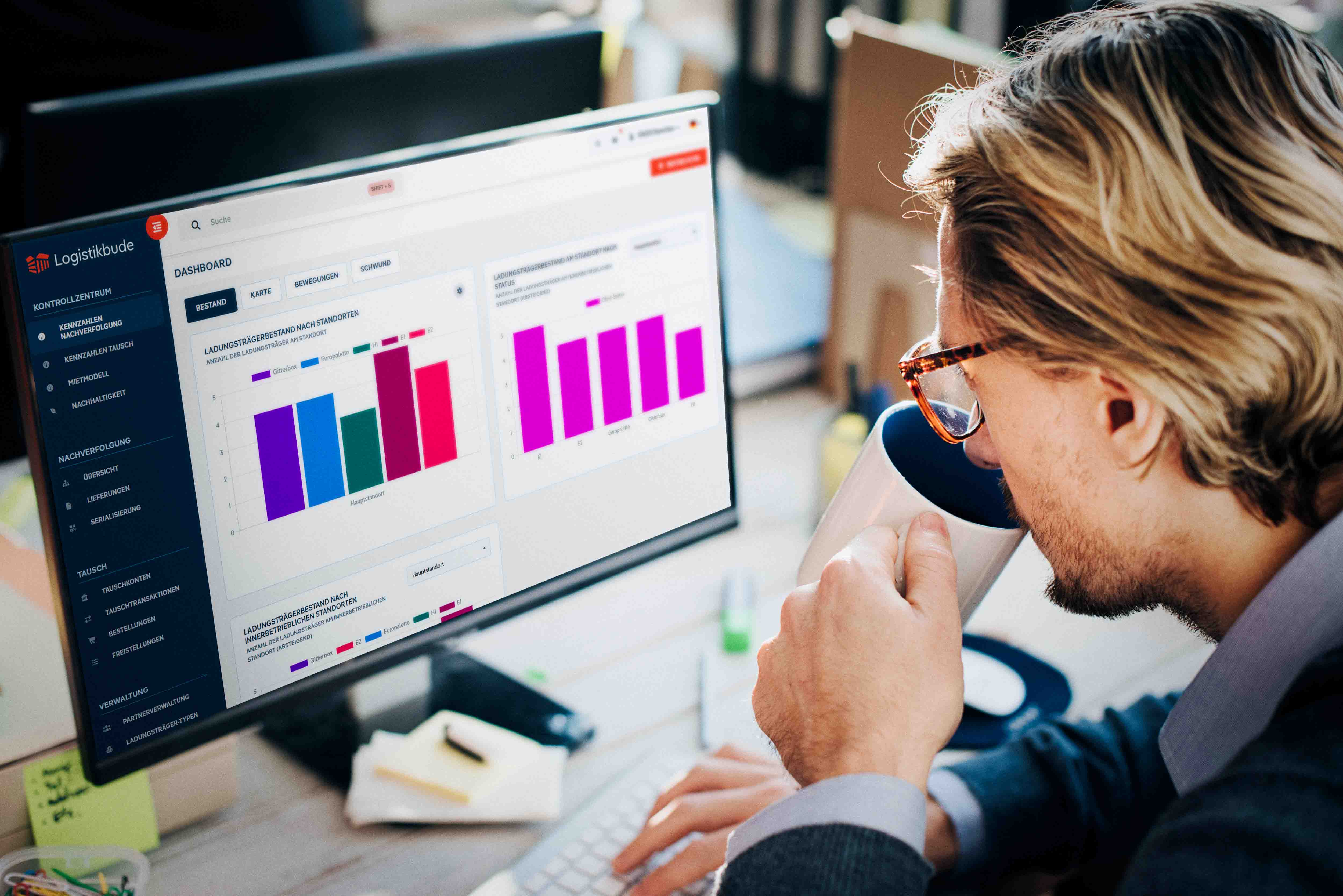
Always see across all locations which load carrier is where and who had it last. Including a history for each object – complete and audit-compliant.

The Right Tracking Technology
Serialization, RFID, Digital Link, IoT, or AI-powered image recognition – we recommend the most economical method depending on the use case and integrate it seamlessly.
6x Faster with AI
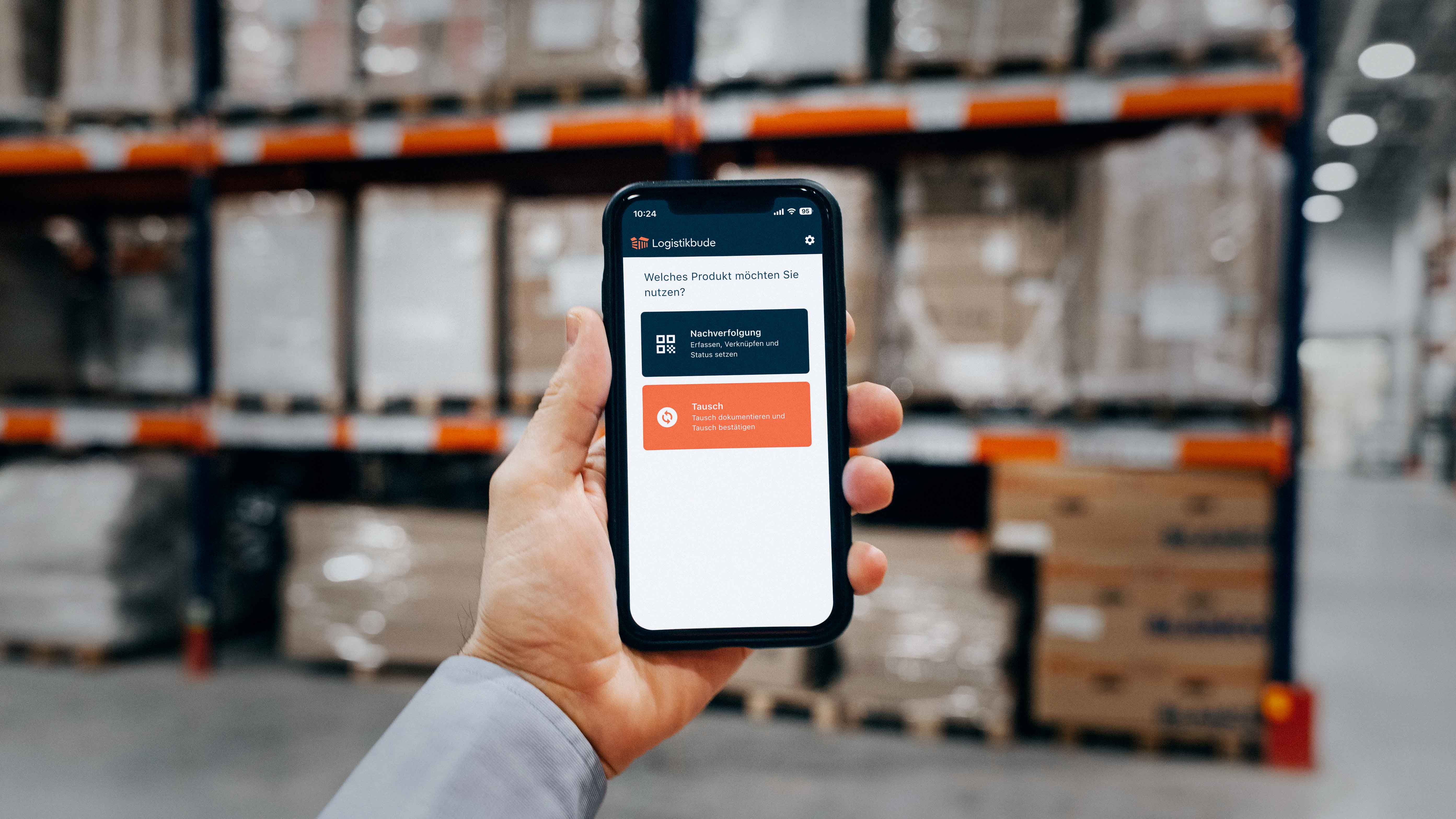
Our AI agent automatically reads load carrier slips and delivery documents, identifies load carrier types via image processing, and suggests the appropriate booking – one click to confirm instead of 60 seconds of typing per document.
Automated Bookings
Data from ERP, TMS, WMS, and loading dock apps automatically flows into tracking. Our AI extracts data from paper documents. Manual data entry is completely eliminated.
Achieve Digital Load Carrier Tracking in 60 Days – Without a Major IT Project
Understand Processes & Objects
During the kick-off, we clarify which types of load carriers you have in circulation, what your current processes look like, and which tracking method (volume booking, track & trace, or IoT) suits which object.
Connect Systems & Hardware
We connect our system via a documented REST API to your ERP, TMS, WMS and – if applicable – to tracking hardware from partners like Deutsche Telekom or Bosch. Your IT team's involvement is minimal.
Test & train
Before going live, we jointly test all tracking processes and train your employees – at the loading dock with the scan app and online in the back office.
Live in 60 days
Automatic data capture, real-time dashboards, and comprehensive object history are fully operational. The ROI from reduced waste usually becomes apparent within a few months after launch.
What Our Customers Say

“Lorem Ipsum Dolor Sit Amet, Consectetur Adipiscing Elit. Suspend Varius Enim in Eros Elementum Tristique. Duis cursus, mi quis viverra ornare, eros dolor interdum nulla, ut commodo diam libero vitae erat.”
Development Education - GSAP


The cloud-based software from Logistikbude could be integrated directly into our existing processes and was therefore quickly ready for use. That immediately convinced us.


Since using the system, we no longer need to manually enter loading equipment slips, which has already reduced our administrative effort by 50%. The trend is rising.

Logistikbude has significantly streamlined our booking processes for CC containers in plant delivery, which saves us around a third of working time.


What impressed us about Logistikbude was not a big promise, but a clean process. The solution works where it needs to work: directly in the warehouse.


With Logistikbude, our customers and service providers can view their inventories and planned orders “live” at any time. As a result, both sides work faster, more efficiently and more resource-friendly.


Logistikbude has not only impressed with its extensive technological expertise and many years of experience in packaging management, but also with its professional, cooperative way of working.


We needed a system that would let us know where our battery containers were at all times. That is why we introduced Logistikbude — preventively so that losses do not even occur in the first place.


In just 1.5 months, we were able to start using the system and thus benefit from a complete digital process that transparently shows us the exchange processes and exchange accounts, including balances, in real time.


The software is so intuitive to use that it hardly needs to be explained. In this way, it can be used directly by our employees.

Questions and Answers about Asset Tracking
If you have any further questions, feel free to contact us via our contact form.

Pallet management encompasses all processes for planning, controlling, and monitoring pallets and other load carriers along the supply chain – from procurement through circulation to return. Effective pallet management minimizes losses, shortens cycle times, and reduces costs through transparent, digital processes.
Reusable container management encompasses all processes for planning, managing, and monitoring reusable containers along the supply chain – from procurement, through circulation between plants, suppliers, and customers, to return. Effective container management minimizes loss, shortens cycle times, and reduces costs through transparent, digital processes.
A digital container account replaces Excel spreadsheets and paper receipts with automated recording in a software system. All container movements are documented in real-time, and balances update automatically – without manual updates.
A container account merely documents balances and movements between two parties. Container management goes significantly further: It encompasses the entire planning, control, and optimization of all load carriers – including ordering, exchange, clearing, and evaluation.
Container accounting is a central component of container management, meticulously documenting all incoming and outgoing load carriers. It ensures that balances with suppliers and customers are accurately maintained and forms the basis for fair container billing.
Every container exchange must be traceably documented – ideally directly where it happens, at the ramp. With a digital container management system, each exchange is automatically recorded and stored in an audit-proof manner.
Our software digitizes all functions of traditional container accounts: automated data capture instead of manual Excel input, real-time data instead of outdated lists, and digital balance reconciliation via weblink instead of email ping-pong. This transforms a static container account into dynamic container management.
Digital container management eliminates input errors, automates accounting, and provides complete transparency across all load carriers. Companies benefit from up to 40% less shrinkage, 80% less manual effort, and a clear overview of the capital tied up in the pool.
The best way to implement modern container management is in four steps: analyze processes, connect existing systems, train employees, and integrate partners. With Logistikbude, you'll be productive in about 60 days – without a major IT project.
Logistikbude has a fully documented REST API. You can connect ERP systems like SAP, Microsoft Dynamics, or Sage, as well as common WMS and TMS solutions. Hardware partners such as Deutsche Telekom or Bosch can also be integrated.
In modern container management, different technologies are used depending on the container type and unit value:
- Serialization (barcodes, QR codes, serial numbers) – ideal for low-cost KLTs
- RFID (passive and active tags) – for medium-value mesh boxes
- Digital Link (smartphone-readable QR codes with web connectivity)
- IoT (GPS trackers, sensors) – for high-value IBCs and special racks
- Blockchain (for secure, decentralized transactions)
- Artificial Intelligence (image processing, predictions)
Learn more here about technologies for tracking load carriers.
Our AI components make container management faster and more precise:
- Automated extraction from delivery notes and PDF documents
- AI agent that suggests bookings and reduces manual data entry to 10 seconds per document
- Chatbot for inventory, balances, and outstanding container liabilities
- AI-powered matching to optimize exchange processes and prevent empty runs
Typically, implementing the logistics solution pays for itself within just a few months after going live. The biggest savings drivers are reduced shrinkage (up to 40%), lower personnel costs (up to 80%), and avoiding unnecessary new purchases – especially for high-value IBCs or special racks.
Ready for Digital Asset Tracking?
In 30 minutes, show us your current situation – we'll demonstrate how much waste, time, and capital you can save with Logistikbude.